
Why one tree can change a garden
A specimen tree is a single, carefully chosen plant that becomes a focal point: a palm beside the pool, a sculptural tree at the entrance, a shade tree over a seating area. Because it is large and established from day one, it gives the garden presence straight away, rather than after several years of growth.
It also does practical work. A tree can shade a terrace or a west-facing wall, soften hard edges, screen a neighbouring window and frame a view from inside the house. That is why we choose the position of major trees early in the design, before paving and pool levels are fixed.
Start with the space, not the species
Before choosing a plant, look at the space it will live in:
- Height and spread. Check the mature size, not the size you buy. A tree that is perfect at planting can crowd a wall or a pergola in a few years.
- Roots. Keep large trees a sensible distance from the pool, paving, drains and boundary walls. Ask what kind of root system the species has.
- Sun and wind. Most palms love full sun. Exposed corners and coastal gardens need tougher choices than sheltered courtyards.
- Fallen material. Fruit, seed pods, flowers and fronds all fall somewhere. Think about whether that is on the pool, the lawn or the paving.
- Access. A large plant has to be brought into the garden. A narrow side passage may limit what can be delivered and how.
Palms that suit Dubai gardens
Palms are the signature plants of the region, and most villa gardens have room for at least one. Common choices include:
- Date palms: a classic for good reason. They cope with heat and strong sun, and give a strong, upright shape. Trunk height and form vary a lot, so choose the individual plant, not just the type.
- Fan palms such as Washingtonia: tall and fast-growing, popular for avenues and screening. They need regular tidying of old fronds.
- Feather palms in softer, more tropical styles, often used near pools and in sheltered courtyards. Some need more water and protection than date palms, so ask how a particular species copes with direct summer sun.
- Smaller and multi-stem palms, which suit courtyards, planters and tighter spaces.
A good rule is to use a few strong palms rather than many small ones. Odd numbers and varied heights look more natural than a regimented row, unless a formal avenue is the intention.
Specimen trees beyond palms
Palms give height but little shade. For real shade and a softer silhouette, consider trees with a wider canopy. Depending on the position, options include:
- Ghaf, the UAE's native tree, which is well adapted to dry conditions and gives a natural, local character.
- Olive trees, which have a sculptural trunk and silvery foliage and suit Mediterranean-style courtyards.
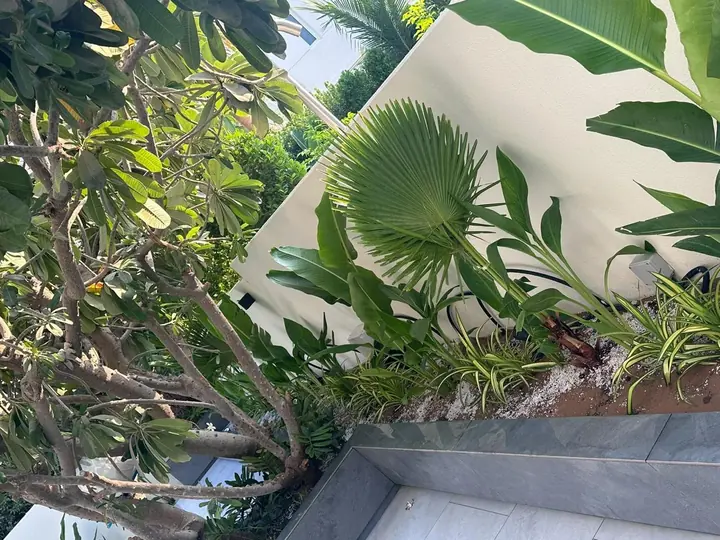
- Frangipani, with its architectural branches and scented flowers, good for sunny spots with free drainage.
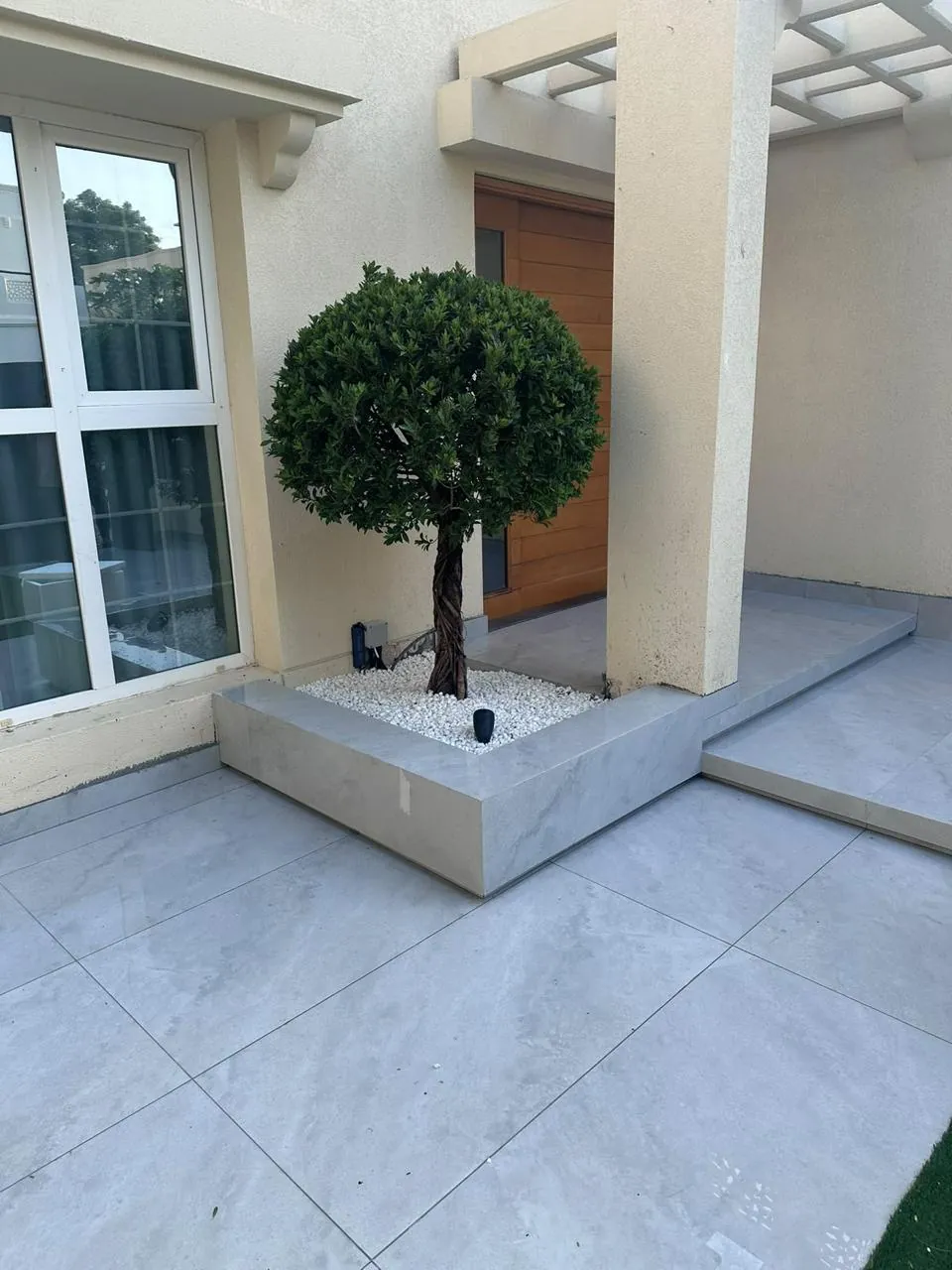
- Clipped feature trees, shaped into balls or standards, which suit formal entrances and raised planters.
- Large-canopy shade trees for the western side of a terrace, where they work alongside, or instead of, a pergola.
Our guide to the best plants for Dubai gardens covers shrubs and climbers that sit well beneath them, and our article on pergolas and shade explains how trees and structures can share the work of cooling a terrace.
Sourcing a good tree
Large trees and palms are usually supplied by specialist nurseries and farms, and quality varies. When choosing, we look for:
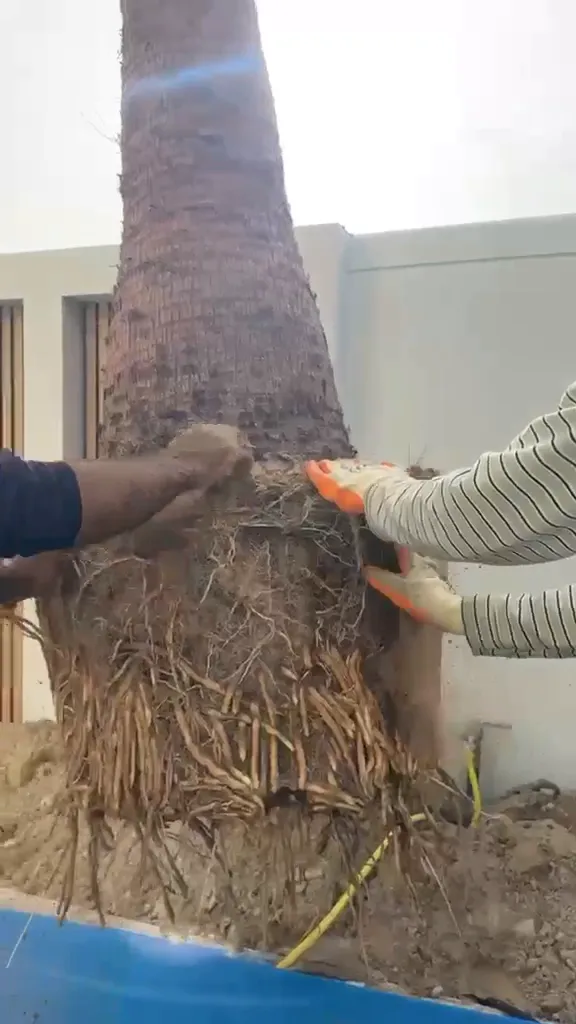
- A healthy root ball that has been prepared properly and kept moist. A tree is only as good as its roots.
- A well-formed crown and trunk, with no obvious damage, pests or scarring.
- Acclimatisation. A plant grown locally is already used to the heat, light and water. This improves its chances of settling.
- Seeing the actual plant. With specimen trees, no two are the same. It is worth choosing the individual tree rather than buying from a photograph.
How a large tree is planted
A mature palm or tree is moved with its root ball intact. Depending on size and access, it may be carried in by hand and machine or lifted over the house by crane. The planting pit is prepared first: it is sized to the root ball, the drainage is checked, and the soil is improved so the roots have something better than compacted building fill to grow into.
The tree is then set at the right level, firmed in, watered thoroughly and, if needed, braced so it stays upright while the roots re-establish. Palms are often wrapped or have fronds tied up to reduce stress during the move. The exact method depends on the plant and the site, which is why we plan it before any heavy work begins.
Aftercare: the first year matters most
A newly planted tree is working hard to grow new roots, and the early months decide how well it settles. In general:
- Water on a proper schedule. New trees often need more frequent watering at first, then less as roots spread. Dedicated irrigation to each tree, rather than sharing the lawn's system, gives better control.
- Avoid overwatering. Saturated soil harms roots as much as drought. Good drainage in the pit matters.
- Mulch. A layer of mulch or gravel around the base keeps the soil cooler and reduces evaporation.
- Check supports and ties and loosen them as the tree becomes stable.
- Watch for stress. Some leaf or frond loss after a move is common. Ongoing yellowing, collapse or a soft crown is a reason to call a specialist quickly.
- Prune sensibly. Remove dead fronds and branches, and have large trees shaped by someone who knows the species.
Routine care for palms and trees is best planned as part of the wider garden, alongside irrigation and lawn care. Ask us about it when we plan your garden.
What affects the cost
Tree and palm costs vary widely, so we price them after seeing the garden. The main factors are the species, the height and trunk size, how well-formed the individual plant is, the difficulty of access, whether a crane is needed, and the planting pit, soil and irrigation required. Planting is priced with the rest of the softscape, and our guide to landscaping costs in Dubai and the interactive cost guide show how the wider garden budget fits together.
Approvals
Some communities have rules on planting, removing or significantly pruning large trees, particularly near boundaries, shared areas and services. Check your community's guidelines before removing an existing tree or placing a very large one near a wall. Our guide to pool and landscaping approvals explains the usual process.
Getting it right
- Decide the role first: focal point, shade, screening or framing a view.
- Check the mature size against walls, the pool, paving and pergolas.
- Choose the individual plant, from a trusted source, with a healthy root ball.
- Plan access and the planting pit before heavy work starts.
- Commit to the first year of aftercare, especially watering.
Our softscape work is led by our co-founder Banu, who chooses each tree and plant for the light, heat and water of the individual garden. Meet Banu.
Common questions
Which palms grow best in Dubai villa gardens?
Date palms are a dependable classic for heat and full sun, and fan palms such as Washingtonia are popular for height and screening. Some softer, more tropical palms suit sheltered courtyards but need more care, so the right choice depends on sun, exposure and space.
How are large palms and trees planted in a villa garden?
They are moved with the root ball intact, by hand and machine or by crane where access is difficult. The planting pit is prepared first, with good drainage and improved soil, and the tree is then set, firmed in, watered and braced if needed.
How often should a newly planted tree be watered?
Newly planted trees usually need more frequent watering at first, which is then reduced as the roots establish. Dedicated irrigation to each tree gives the best control. Avoid overwatering, because waterlogged soil damages roots.
What are good shade trees for a Dubai garden?
Options include ghaf, the UAE's native tree, and large-canopy shade trees placed on the sunny western side of a terrace. The right species depends on space, roots and how much shade you want, so choose with the mature size in mind.
Do I need approval to plant or remove a large tree?
Some communities have rules about large trees, particularly near boundaries, shared areas and services. Check your community's guidelines before removing an existing tree or planting a very large one.