
Why shade matters so much in Dubai
Paving, decking and furniture left in full sun become uncomfortable to use for long stretches of the year. Shade changes that. It makes a terrace usable in the late afternoon, protects furniture and cushions from fading, and helps nearby planting that would struggle in full sun.
The best shade is planned with the rest of the garden, not added later. It should sit where you actually spend time: next to the kitchen doors, beside the pool, or over an outdoor dining or cooking area.
Start with the sun, not the structure
Before choosing a style, look at how the sun moves across your garden:
- West-facing terraces take the strongest afternoon sun and need the most shade, often with a screen on the low western side as well as a roof.
- East-facing spaces are pleasant in the afternoon but bright in the morning, so lighter, more open shade often works.
- Areas next to the house may already get shade from the building for part of the day. A pergola there can extend it rather than create it from scratch.
- Poolside, many people want sun on the water and shade on the loungers, so the shade usually sits beside the pool rather than over it.
A short visit to the garden at different times of day tells you more than any drawing.
Types of pergola and shade
Open-slatted pergolas
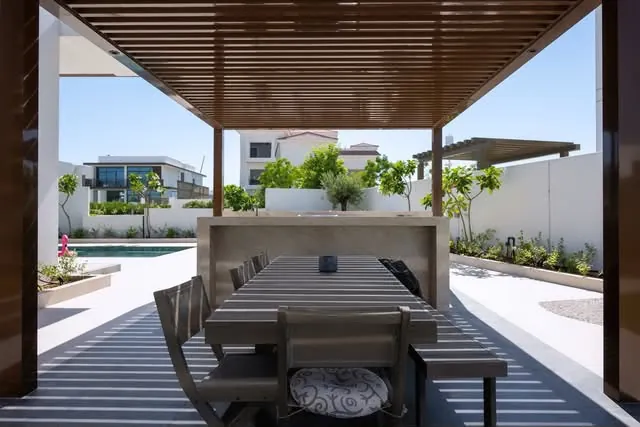
Fixed slats or beams give filtered, striped shade and a light, architectural look. The closer the slats, the deeper the shade. They let hot air rise and escape, which keeps the space feeling airy, but they do not keep out rain or dust.
Louvred (bioclimatic) pergolas
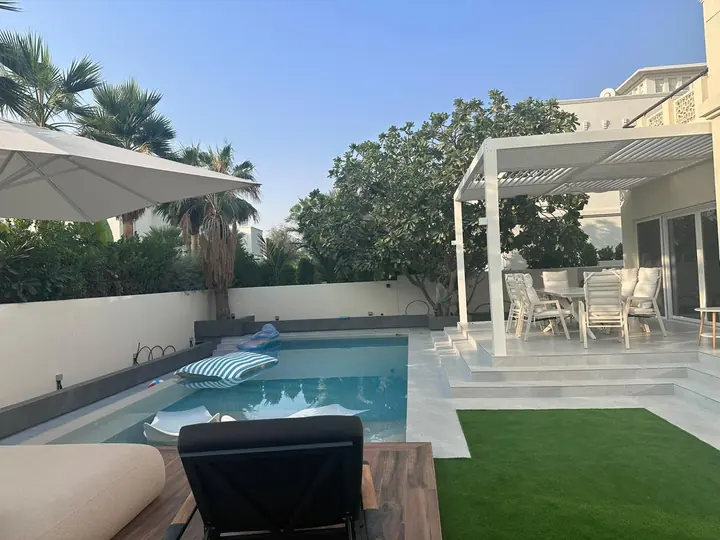
Aluminium louvres that rotate let you choose between open sky, filtered light and a closed roof. Many systems can be motorised, and some can include integrated lighting or side screens. They cost more than a fixed pergola but give the most control across the seasons.
Solid roofs and pavilions
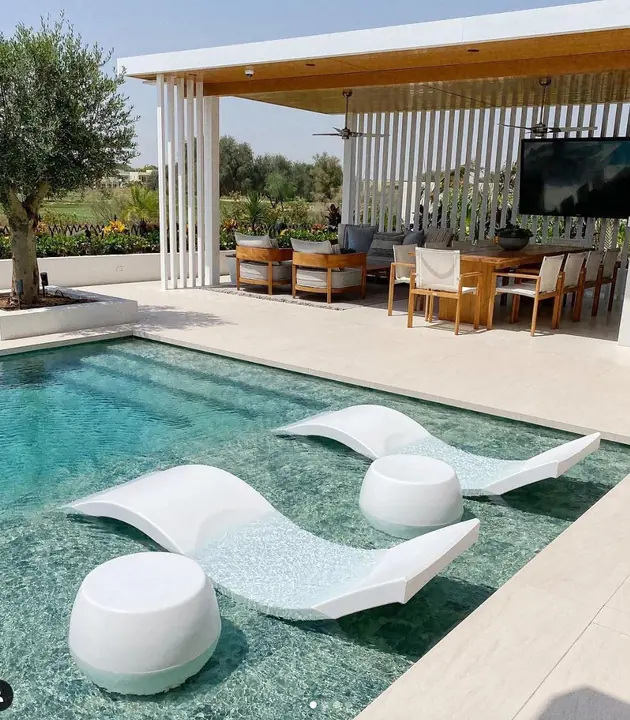
A fully covered pavilion or roof extension gives deep, dependable shade and room for ceiling fans, lighting and even an outdoor television. It feels like an outdoor room. Because it is a more permanent structure, it needs careful design for drainage, wind and the look of the villa.
Shade sails and fabric canopies
Tensioned fabric sails are a lighter, more economical option and suit play areas, parking and irregular spaces. They need strong fixing points and good-quality fabric, and should be checked and retensioned from time to time.
Large umbrellas and planting
Cantilever umbrellas are flexible and need no fixed structure. Trees and climbers give the softest shade of all, although they take time to grow. Our guide to the best plants for Dubai gardens covers shade trees and climbers that cope with the heat.
Materials that last in the Dubai climate
A shade structure in Dubai faces strong sun, heat, humidity on the coast, dust and the occasional strong wind. Material choice decides how it looks after a few summers.
- Powder-coated aluminium: light, strong and low-maintenance. It does not rot or rust, and timber-effect finishes give a warm look with far less upkeep than real wood.
- Hardwood timber: beautiful and natural, but it needs regular oiling or sealing and can crack, fade or move in the heat. It is best used where you are happy to maintain it.
- Steel: allows slim, long spans, but it must be properly protected against corrosion, especially near the coast or the pool.
- Fabric: choose UV-stabilised, breathable shade fabrics made for outdoor use. Ask how well a fabric holds its colour in strong sun, and choose a fabric density that suits the light you want underneath.
Whatever the material, the fixings, footings and drainage matter as much as the finish. A pergola needs proper foundations and secure fixings to cope with strong winds, and a solid roof needs somewhere for rainwater to go.
Making the space comfortable
Shade is the start. A few additions make the space usable for more of the year:
- Ceiling fans keep air moving on warm evenings.
- Side screens, slatted panels or planting block low sun and give privacy from neighbours.
- Lighting built into the beams makes the space work after dark.
- Planting around the edges softens the structure. Bougainvillea and jasmine are popular climbers on pergola posts.
Water, power and lighting cables are much easier to install before paving goes down, so it helps to plan them at the same time as the pergola. If you are thinking about cooking outside too, our guide to outdoor kitchens in Dubai explains how shade and cooking areas work together.
How much does a pergola cost in Dubai?
The cost depends on the size, the type of structure, the material and finish, and extras such as motorised louvres, lighting, fans and screens. These are typical starting ranges for a pergola or shade structure:
| Finish level | Pergola or shade |
|---|---|
| Refined | 18,000–40,000 |
| Premium Natural materials, bespoke elements | 22,500–50,000 |
| Signature Statement materials, fully bespoke | 27,900–62,000 |
Indicative starting ranges in UAE dirhams, excluding VAT. Lighting and water features typically start from around AED 8,000 to 20,000. Your exact figure comes after a site visit. Try our interactive cost guide to build your own estimate, and see how much landscaping costs in Dubai for the wider garden budget.
Approvals
Most villa communities treat pergolas, pavilions and other fixed shade structures as external changes that need the master developer's approval, and many have design guidelines on height, position, colour and how close a structure can be to the boundary. Rules vary between communities, so check yours before you buy or build anything. Our guide to pool and landscaping approvals explains the usual process.
Getting it right
- Watch the sun first and put shade where you actually sit.
- Choose the type for how you live: open slats for airy shade, louvres for control, a pavilion for an outdoor room.
- Pick materials for the climate and be honest about how much upkeep you want.
- Plan power, lighting and fans early, before paving goes down.
- Check your community's rules before ordering anything.
Shade is one part of a wider garden plan. See our villa landscaping ideas for how terraces, pools and planting fit together.
Common questions
How much does a pergola cost in Dubai?
As a guide, a pergola or shade structure typically starts from around AED 18,000 to 40,000 with a refined finish, and more with natural materials or fully bespoke designs, excluding VAT. Size, louvres, lighting and fans affect the total. A site visit gives an exact figure.
Which is better in Dubai, timber or aluminium?
Powder-coated aluminium is lighter on maintenance and does not rot or rust, and timber-effect finishes give a warm look. Hardwood timber is beautiful but needs regular oiling or sealing and can crack or fade in the heat.
What is a louvred or bioclimatic pergola?
It is a pergola with aluminium louvres that rotate, so you can open the roof to the sky, filter the light or close it completely. Many can be motorised and fitted with lighting and side screens.
Do I need approval for a pergola in Dubai?
Usually, yes. Most communities treat pergolas and other fixed shade structures as external changes that need the master developer's approval, often with rules on height, position and colour. Check your community's guidelines first.
Should a pergola go over the pool?
Usually not. Most people prefer sun on the water and shade beside the pool, over the loungers or a dining terrace. A pavilion or louvred pergola next to the pool often works best.